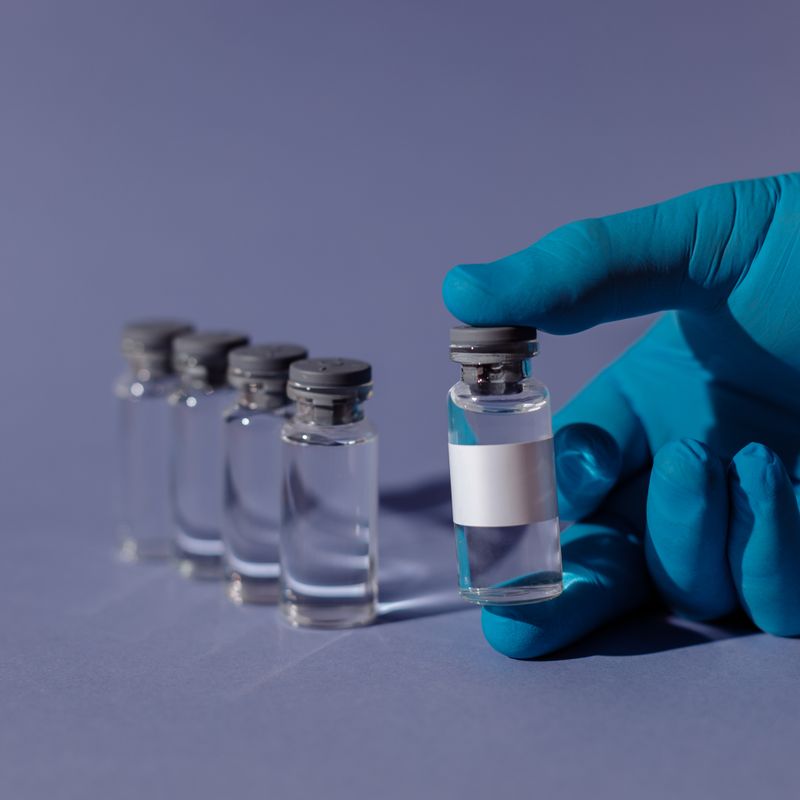
Storage is the least glamorous part of this subject and the one most worth getting right. A compound stored badly can degrade well before its stated shelf life, and you will usually have no way of knowing.
The specific requirement for any product is stated on its own listing. What follows is the general picture, and why it matters more here than in cooler climates.
The three things that degrade a peptide
Heat
Temperature is the big one. Many lyophilised, freeze-dried, preparations are reasonably stable at room temperature for short periods, but sustained heat accelerates degradation. A South African summer car boot at midday will comfortably exceed 60 °C, which is well outside anything a listing will describe as acceptable.
Light
Ultraviolet light degrades many compounds. This is why vials are supplied in boxes and why “protect from light” appears on storage instructions. Leaving a vial on a sunny windowsill is a slow way of throwing it away.
Moisture
Lyophilised powders are hygroscopic: they pull water out of the air. Along the coast, in Durban or Cape Town in winter, ambient humidity is high enough to matter. Keep the vial sealed until it is used.
What to do when your parcel arrives
- Open it promptly rather than leaving it at the door or in a hot car.
- Check the storage line on the product listing or the packaging.
- Anything requiring 2–8 °C goes into the fridge, the body of the fridge, not the door, where the temperature swings every time it is opened.
- Anything at room temperature goes somewhere cool, dark and dry. A cupboard away from the stove and the window, not the bathroom.
- Keep it in its original box. The box is the light protection.
A note on load-shedding
This is a genuinely South African consideration. Domestic fridges hold temperature reasonably well through a two to four hour outage provided the door stays shut. The practical advice is simple: during an outage, do not open the fridge unnecessarily.
For longer or repeated outages, a fridge that is fuller holds its temperature better than an empty one, because the contents act as a thermal mass. Bottles of water fill the gap cheaply.
Things people get wrong
- Freezing something that should be refrigerated. Freeze–thaw cycles can damage some preparations. Follow the listing, not instinct.
- Storing in the fridge door. It is the warmest and most variable part of the fridge.
- Decanting into another container. The original packaging is specified for a reason.
- Assuming all products are the same. Two items in the same order can have entirely different storage requirements.
If you are unsure
Email us your order number and we will confirm the storage requirement for the item you received.
Storage is the boring half. The other half is getting the concentration right in the first place, and the reconstitution calculator will do that arithmetic for you rather than leaving you to do it at the kitchen counter. Everything we hold is listed in the store with its storage requirement stated.