Subcutaneous sites, technique and aftercare
A subcutaneous injection goes into the layer of fat just beneath the skin, rather than into muscle. Three areas are generally used: the abdomen, the back of the upper arm, and the thigh. Correct technique and disciplined site rotation are what keep absorption consistent and the skin in good condition.
General information only. Not medical advice, and not instructions for any product sold on this site. If you have been prescribed an injectable medicine, follow the directions you were given.
Recommended injection sites
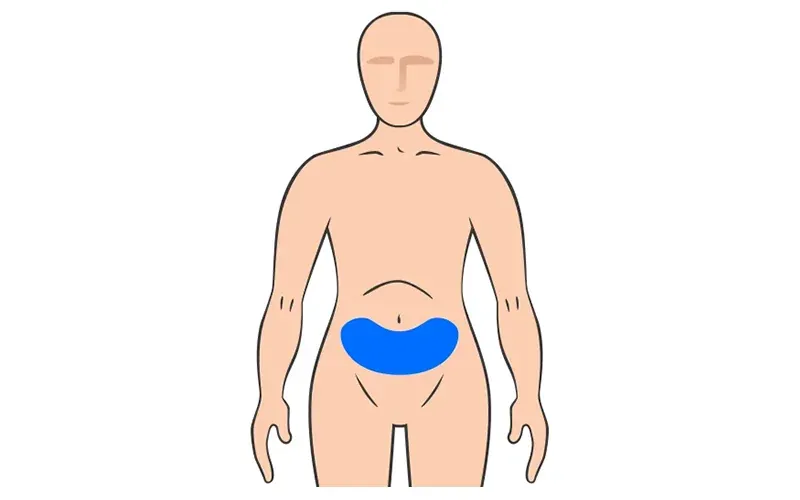
- Choose an area at least 2.5cm (1 inch) away from the belly button.
- Avoid scars, stretch marks and irritated skin.
- The fat layer is usually most even here.
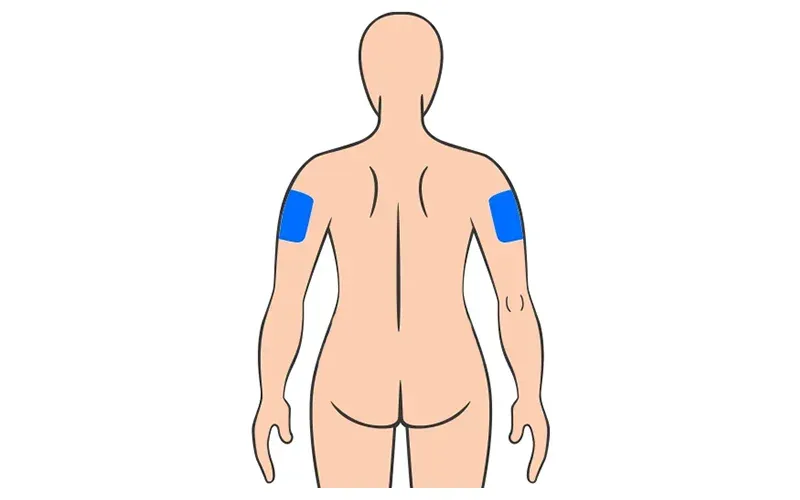
- Use the back (posterior) area, between shoulder and elbow.
- Pinch a fold of skin to lift the tissue clear of muscle.
- Hard to reach on yourself, so it often needs a second person.

- Aim for the middle front or middle outer portion.
- Keep clear of the knee and the hip.
- Check the site is free of bruising or redness.
Step-by-step procedure
- Wash your hands
- Soap and warm water, thoroughly.
- Dry on a clean towel, or let them air dry.
- Prepare the site
- Wipe with an alcohol swab and let it dry completely. Injecting through wet alcohol stings.
- Do not touch the cleaned area again before injecting.
- Pinch the skin
- Gently pinch a fold between your fingers.
- This lifts the subcutaneous tissue away from the muscle beneath.
- Insert the needle
- Hold at a 90 degree angle to the skin for a standard short pen needle.
- A 45 degree angle is used with longer needles or very little subcutaneous fat, if you have been advised to.
- Push straight in with one smooth, quick motion.
- Inject
- Press the plunger slowly and steadily rather than forcing it.
- Pause a few seconds at the end so the full dose is delivered and not drawn back out.
- Withdraw and finish
- Pull the needle out at the same angle it went in, then release the pinch.
- If there is any bleeding, press gently with clean gauze or cotton wool. Do not rub the site.
- Dispose of the needle immediately, as below.
Best practice
Never use the same spot for consecutive injections. Move between regions week to week, and keep each new site 2cm to 3cm from the last within a region.
Do not inject into skin that is red, irritated, bruised, burned, hardened, scarred or lumpy, or into moles and tattoos.
Watch for changes around the sites you use. Repeated injection into one spot can thicken the tissue, which then absorbs unpredictably.
A cold compress on the area beforehand can help if you find injections uncomfortable. Relax the muscle and breathe steadily rather than tensing up.
Keeping a written or phone record of which site was used, and when, is far more reliable than memory.
Disposing of needles in South Africa
They are a genuine hazard to refuse workers. Use a rigid, puncture-resistant sharps container and seal it at the fill line. Many South African pharmacies accept full containers, and some clinics do too. Ask your local pharmacy what they take before you need to hand one in.
When to speak to a healthcare professional
- Bleeding that does not stop with light pressure
- Spreading redness, heat, swelling, pus or fever
- Lumps, dents or hardened patches at injection sites
- Pain that persists well after the injection
- Any uncertainty at all about what you are doing
The information on this page is for educational purposes only and does not replace medical advice. Always consult a qualified healthcare provider for guidance on your own circumstances and injection technique.