Reconstitution is the part of buying a self-mix vial that makes people nervous, and it is much simpler than it looks. You are dissolving a dry powder in a measured amount of liquid. Almost every mistake comes down to one of two things: cleanliness, or arithmetic.
Every self-mix vial we sell comes with bacteriostatic water in the box, so you are not hunting for it separately.
What you need
- The vial of lyophilised (freeze-dried) powder.
- Bacteriostatic water, which comes with our vials.
- Alcohol swabs.
- A clean syringe to draw and transfer the water.
- A clean, clear surface, and a pen to label the vial afterwards.
Bacteriostatic water, not sterile water
The two sound interchangeable. They are not. Bacteriostatic water contains a small amount of benzyl alcohol, usually 0.9%, which stops bacteria growing in it. That matters because a reconstituted vial is punctured more than once over its life. Sterile water has no preservative, so once it has been opened it is meant for a single use.
For a vial you will draw from more than once, bacteriostatic water is the right choice, which is why it is what we supply.
Step by step
- Wash your hands and clear a clean surface.
- Let the vial and the water reach room temperature if they have been in the fridge. Cold liquid dissolves powder more slowly.
- Take the plastic caps off and wipe both rubber stoppers with an alcohol swab. Let them dry for a few seconds.
- Draw the volume of bacteriostatic water you have decided on. There is more on choosing it below.
- Push the needle through the peptide vial’s stopper at a slight angle, and let the water run slowly down the inside wall of the vial. Do not squirt it straight onto the powder. The vial is often under slight vacuum and may pull the water in by itself, which is normal.
- Remove the syringe. Swirl the vial gently, or roll it between your palms. Do not shake it. Shaking can damage the peptide and makes it foam.
- Leave it to stand until the solution is completely clear. That can take a few minutes.
- Write the date and the concentration on the vial.
- Put it in the fridge.
Choosing how much water to add
The amount of water does not change how much peptide is in the vial. It only changes how concentrated the solution is, and therefore how easy it is to measure a given quantity accurately.
The arithmetic is one line: concentration equals milligrams in the vial divided by millilitres of water. A 10mg vial with 2ml of water gives 5mg in every millilitre. The same vial with 1ml gives 10mg per millilitre, which is twice as strong and twice as easy to over-measure by a small slip.
More water makes small quantities easier to read on a syringe. Less water keeps the volume down. There is no single right answer, only the one that suits the measurement you need. Our peptide calculator does the arithmetic for any vial size and volume, and it is worth using even if you are confident with numbers, because a mistake here is multiplied every time the vial is used.
After it is mixed
- Keep it in the fridge, between 2 and 8 °C, and out of direct light.
- Never freeze a reconstituted vial.
- Treat it as having a shorter life than the dry powder did. A few weeks in the fridge is the usual working assumption, and the listing for the product is the final word.
- Discard it if the solution turns cloudy, changes colour or shows visible particles. The one expected exception is GHK-Cu, which turns deep blue because of the copper.
The common mistakes
- Shaking the vial instead of swirling it.
- Squirting water onto the powder instead of running it down the glass.
- Not labelling it. You will not remember the concentration in three weeks.
- Leaving it on the counter after use, especially in a South African summer.
- Guessing the arithmetic instead of using the calculator.
If you would rather skip all of this
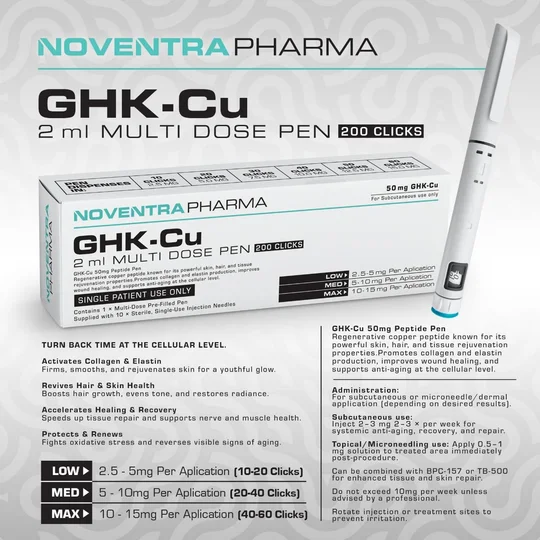
Pre-filled pens arrive ready to use, with no reconstitution and no arithmetic. For the weight-loss compounds they usually cost more per milligram, but for several skin and longevity compounds the pen is actually cheaper. Peptide pens vs self-mix vials compares real prices across the range. Our peptide pen range and the pen options on the retatrutide and tirzepatide price pages are the place to look.
Everything we supply is for laboratory research use only and is not for human consumption.
Storage matters as much as preparation: how to store peptides covers heat, light and moisture, and the mistakes that cost you a vial.