NAD+ and NMN are sold side by side and described in almost the same words. They are related, but they are not the same thing, and the difference matters when you read the research or choose between them.
The short version
NAD+ (nicotinamide adenine dinucleotide) is the coenzyme itself, present in every cell. NMN (nicotinamide mononucleotide) is a precursor, one step before it. Cells turn NMN into NAD+ in a single enzymatic reaction.
Neither is a peptide. Both are small molecules, which is why they are measured in hundreds of milligrams rather than the micrograms you see with peptides.
Why anyone cares about NAD+
NAD+ has two jobs. The first is energy: every time a cell turns glucose or fat into usable energy, NAD+ carries the electrons. The second is as fuel for enzymes involved in repair and maintenance, including the sirtuins and the PARP enzymes that fix damaged DNA. Those enzymes use NAD+ up.
Tissue NAD+ levels fall with age in animals and in several human tissues, partly because an enzyme called CD38, which breaks NAD+ down, becomes more active. That decline is the whole reason for the interest. If levels fall with age, the question is whether raising them does anything useful.
The precursor argument
NAD+ is a relatively large molecule and does not pass easily into cells intact. Much of it is broken down outside the cell into smaller pieces, including NMN, which cells take up and rebuild into NAD+. That is the case for going straight to a precursor.
It is not settled. NMN itself is partly converted before it enters some cells, and a dedicated NMN transporter reported in mice in 2019 is still debated. Nobody has shown conclusively which route raises NAD+ most effectively in human tissue.
What the human research shows
- NMN has a handful of small human trials, mostly oral and mostly from the 2020s. They generally show it is well tolerated and raises NAD+ levels in the blood. Effects on outcomes are modest and inconsistent. The most cited result is a 2021 study in 25 prediabetic women, where 250mg a day for ten weeks improved insulin sensitivity in muscle.
- NAD+ is best known from IV drips offered at clinics. Controlled trial evidence for those drips is limited. They are usually run slowly because a fast infusion commonly causes flushing, nausea and chest tightness.
- For both, raising a blood level is not the same as showing a health or longevity benefit. That link has not been demonstrated in people.
Our NAD+ and NMN options
- NAD+ 1000mg self-mix vial from Noventra Pharma: R1,060, with bacteriostatic water included in the box.
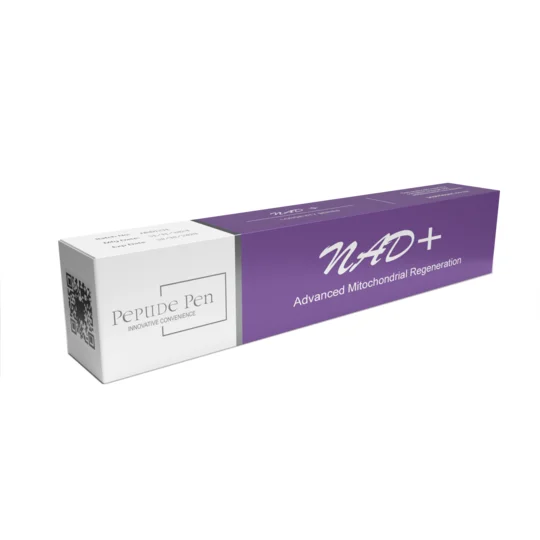
- NAD+ 1000mg pen from Peptide Pen: R890. Pre-filled, 240 clicks at about 4.2mg each, six sterile needles in the box.
- NMN 1500mg pen from Peptide Pen: R780. Pre-filled, 240 clicks at about 6.25mg each, six sterile needles in the box.
The NAD+ pen is cheaper than the NAD+ vial for the same 1000mg, which is unusual. Peptide pens vs self-mix vials explains where pens win on price and where they do not.
Commonly researched alongside
NAD+ and NMN come up in the same protocols as the mitochondrial peptides MOTS-c and SS-31, and alongside glutathione. They are grouped together because they are all studied around cellular energy, not because the combination has been shown to work.
Prices are correct at the time of writing, September 2026. Everything we supply is for laboratory research use only and is not for human consumption.
Reading the studies yourself? How to read a peptide study without a science degree shows what to look for, and why a mouse result is not a human one.