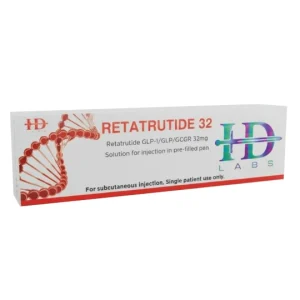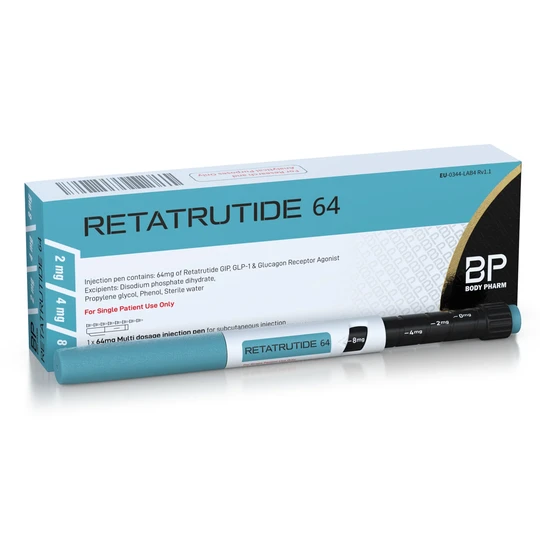
Retatrutide Peptide Pen – 64mg
Product Overview
Retatrutide is a novel peptide compound being researched for its activity across three metabolic hormone pathways: GLP-1, GIP and glucagon receptors.
Unlike selective GLP-1 receptor agonists, retatrutide is designed to simultaneously interact with all three receptor systems. Research has focused on the combined effects of these pathways on appetite regulation, energy expenditure, glucose metabolism, lipid metabolism and body composition.
The Retatrutide Peptide Pen provides a convenient multi-dose format for research protocols involving metabolic and appetite-regulation pathways.
Triple-Receptor Activity
Retatrutide is researched as a triple agonist, with activity at:
GLP-1 Receptor
GLP-1 signalling is associated with appetite regulation, satiety, gastric motility and glucose metabolism.
GIP Receptor
GIP signalling is involved in nutrient metabolism, insulin-related pathways and energy regulation.
Glucagon Receptor
Glucagon receptor activity is associated with energy expenditure, lipid metabolism and mobilisation of stored energy.
The combination of these three pathways makes retatrutide a significant area of research into metabolic regulation and body composition.
Research Applications
Retatrutide research includes:
- Appetite and satiety signalling
- Energy expenditure
- Glucose metabolism
- Insulin-related pathways
- Lipid metabolism
- Fat oxidation
- Body-composition research
- Metabolic flexibility
- GLP-1, GIP and glucagon signalling
- Weight-management research
Mechanism of Action
Retatrutide interacts with three hormone receptor systems involved in metabolic regulation.
Research into its activity examines the combined effects of:
- Reduced appetite signalling
- Increased satiety
- Altered energy expenditure
- Glucose regulation
- Lipid utilisation
- Hepatic metabolic pathways
- Insulin signalling
- Changes in energy balance
This multi-receptor mechanism is the primary feature distinguishing retatrutide from compounds acting primarily through a single metabolic receptor.
Dosage & Administration
The following dosing schedule is the supplied product protocol.
Starting Dose
2mg once weekly
The supplied protocol recommends beginning at 2mg once weekly before gradually increasing the dose.
Dose Escalation
| Treatment Period | Weekly Dose |
|---|---|
| Weeks 1–4 | 2mg once weekly |
| Weeks 5–8 | 4mg once weekly |
| Weeks 9–12 | 8mg once weekly |
| From Week 13 | 12mg once weekly |
The supplied protocol states that the dose may be adjusted according to individual tolerance and practitioner guidance.
Frequency
Once weekly, preferably on the same day each week.
Timing
The supplied information states that retatrutide can be administered at any time of day, regardless of meals.
Changing the Dosing Day
The supplied protocol indicates that the weekly dosing day can be changed provided that at least 3 days have passed since the previous dose.
Administration
Retatrutide is supplied for subcutaneous administration.
The supplied product information identifies the following general administration areas:
- Upper arms
- Abdomen/stomach
- Upper legs/thighs
Do not administer intravenously or intramuscularly.
Missed Dose
According to the supplied protocol:
- If the missed dose is 5 days or less overdue, administer it when remembered and continue with the normal schedule.
- If it has been more than 5 days, skip the missed dose and resume the normal weekly schedule.
- Do not administer an additional dose to compensate for a missed dose.
Research Considerations
Research protocols involving retatrutide commonly examine metabolic markers and changes in appetite, energy balance and body composition over an extended period.
The supplied information recommends assessing tolerance during dose escalation rather than immediately moving to higher doses.
Potential Effects & Considerations
The supplied information identifies gastrointestinal and metabolic effects as areas to monitor, including:
- Nausea
- Vomiting
- Diarrhoea
- Reduced appetite
- Dehydration
- Dizziness
- Changes in blood glucose
- Gastrointestinal discomfort
Severe or persistent abdominal pain warrants prompt medical assessment because pancreatic inflammation can present with significant abdominal symptoms.
Individuals researching metabolic compounds should also consider relevant glucose, metabolic and clinical parameters.
Pregnancy & Breastfeeding
The supplied product information advises against use during pregnancy and breastfeeding and recommends discussing reproductive plans with an appropriate healthcare professional.
Storage & Handling
Store the product according to the manufacturer’s specified storage conditions.
- Keep protected from excessive heat and direct light.
- Keep the pen capped when not in use.
- Do not freeze.
- Keep out of reach of children.
- Inspect the solution before use.
- Do not use if cloudy, discoloured or containing visible particles.
- Discard if expired or if the formulation appears abnormal.
Precision Pen Format
The Retatrutide Peptide Pen provides a convenient multi-dose delivery format designed for controlled dosing across a structured weekly research protocol.
The click-based pen format allows researchers to work through progressive dosing stages while maintaining a consistent delivery system.
Important Notice
Retatrutide is a research compound being investigated for its effects across GLP-1, GIP and glucagon receptor pathways.
The dosing schedule and research applications above are based on the supplied product information and should be considered the manufacturer’s stated research protocol.
For research use only. Not intended for human consumption.